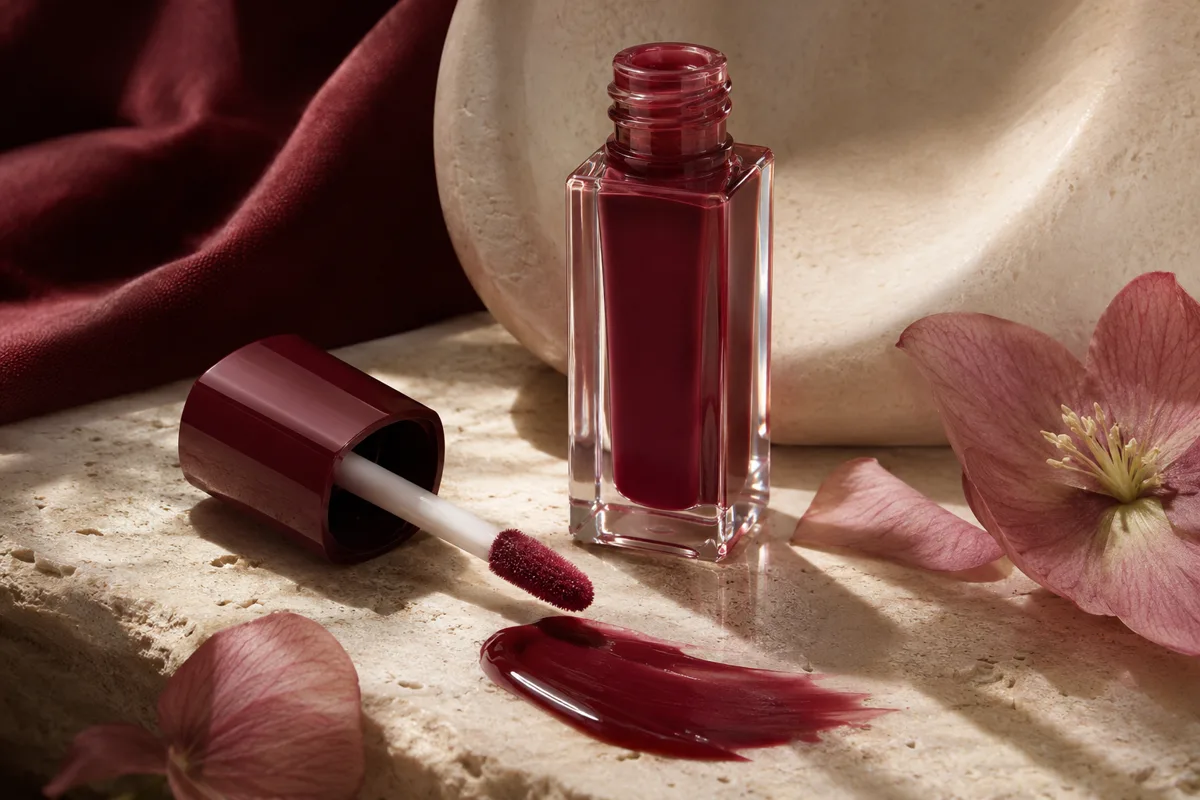
Separate the first look from the remaining color
A glossy stain can look reflective when first applied and different after its surface layer wears away. A lipstick may also leave pigment behind. The useful question is what the product is designed to do, not whether the word stain appears somewhere in its marketing.
Read, apply and record the actual formula
Some products are designed to set undisturbed, and others are intended for easy repeated swipes. Do not wipe off a new product after an arbitrary social-media waiting time and call the result its normal performance. Follow the specific package directions first, then evaluate whether the effect suits you. For your own comparison, record the amount applied, whether the lips were clean and dry, and the appearance before and after a normal meal. Keep lighting similar. This creates a useful personal record without turning an individual experience into a claim that all stains outperform all lipsticks. We have not conducted controlled staining or transfer tests.
Before you decide
- Read the intended finish and usage together.
- Do not assume tint means low pigment.
- Check removal instructions before choosing long wear.
Sources & scope
Checked November 4, 2026. Official references support the specific product or labeling statements. Dated official US list prices appear only where explicitly stated; final checkout cost, stock and merchant eligibility can differ. Application workflows are editorial guidance, not independent testing.
Keep reading
Cream, matte, stain or gloss: choose the finish first ↗
Gloss or gloss stain: choose the result you want after the shine ↗